MEP 3D Simulation and Modelling
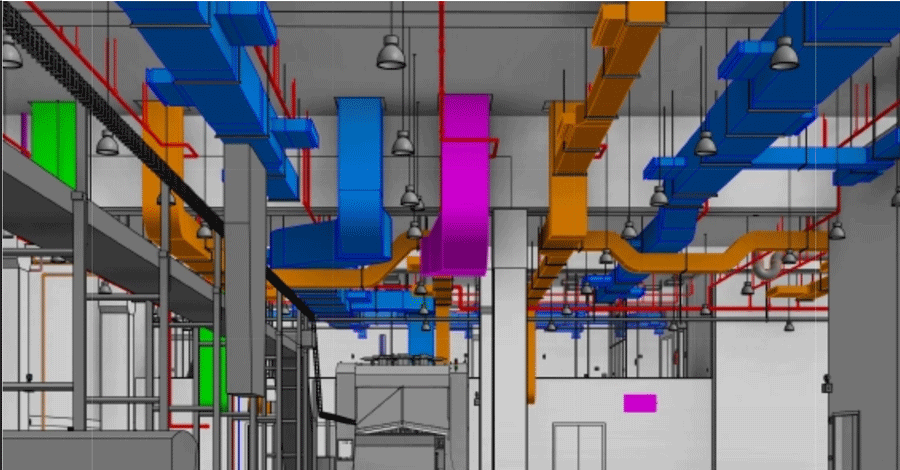
We utilize advanced BIM technology and Autodesk Revit to create precise 3D
models and simulations of MEP systems, providing clients with accurate visualizations,
coordinated designs, and efficient maintenance strategies for their projects.
Serene Designs offers comprehensive 3D simulation and modeling services
that enhance design accuracy, reduce conflicts, and ensure seamless integration between
architectural, structural, and MEP disciplines. Our models are developed to support all
project stages — from concept and coordination to facility management and maintenance
planning.
Our 3D Modelling Capabilities
Our Revit-based MEP models provide an interactive platform for reviewing design
intent, optimizing space utilization, and ensuring that every service is
coordinated efficiently. The 3D environment helps visualize complex systems,
improving decision-making and eliminating rework during construction.
Simulation and Performance Analysis
Using integrated simulation tools, we analyze system behavior under real-world
conditions — including thermal comfort, air velocity, lighting distribution, and
energy demand. This allows our engineers to fine-tune design parameters and
achieve the highest standards of efficiency and performance before project
execution.
Questions? You’re Covered
-
1. What is MEP 3D Simulation and Modelling?
MEP 3D Simulation and Modelling involves creating intelligent 3D
representations of mechanical, electrical, and plumbing systems
using BIM software like Autodesk Revit. It helps in
coordination, clash detection, visualization, and maintenance
planning throughout the project lifecycle.
-
2. How does 3D simulation improve project
efficiency?
3D simulation enables engineers and clients to visualize systems
before construction, identify design conflicts early, and make
informed decisions. This minimizes errors, reduces rework, and
significantly shortens the overall project timeline.
-
3. What software tools are used for 3D simulation and
coordination?
We use Autodesk Revit for MEP modeling, Navisworks for clash
detection and coordination, and TRACE 3D Plus for energy
simulation. CFD and Dialux are employed for airflow and lighting
performance studies.